
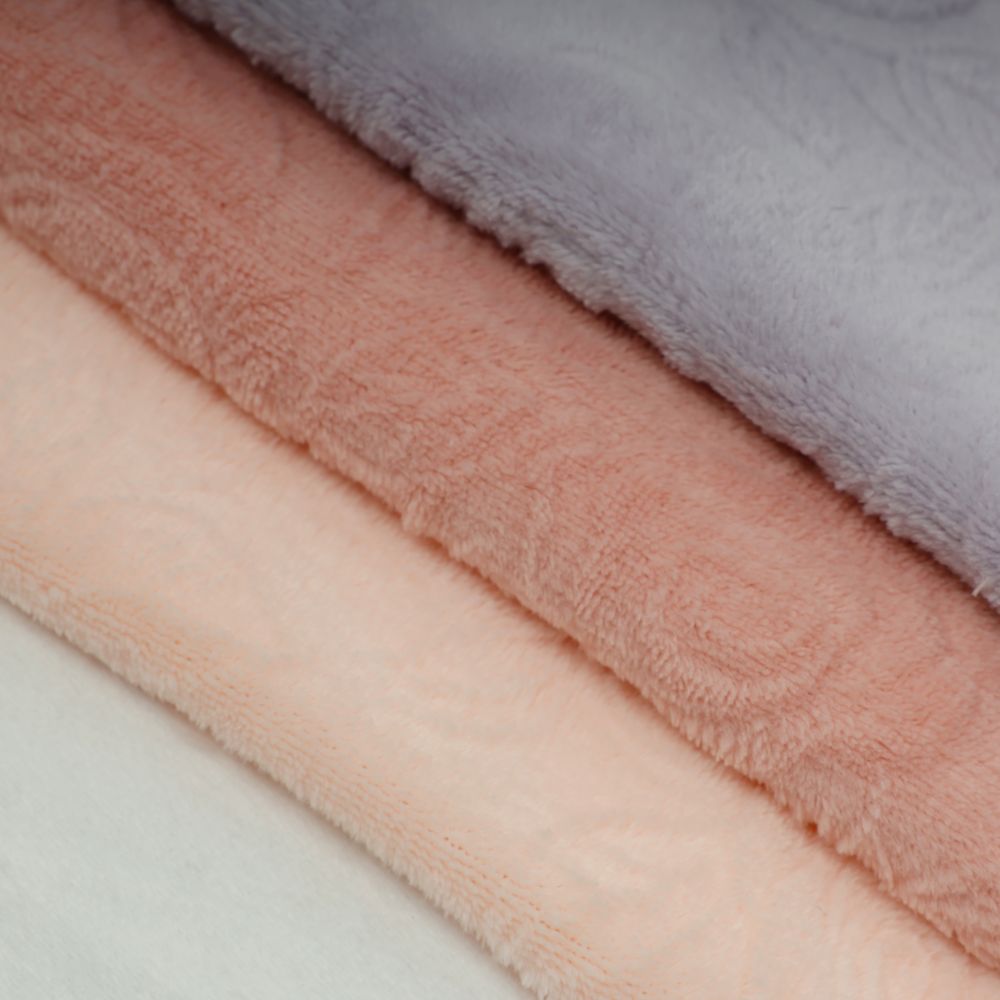


셰르파 플리스 is a soft, high-pile synthetic textile designed to imitate the warmth and appearance of natural sheep’s wool or shearling. Most Sherpa fleece fabrics are made from polyester, acrylic, or cotton blends, or recycled synthetic fibres. They offer excellent thermal insulation, lightweight comfort, moisture resistance, and cost efficiency, making them ideal for apparel, blankets, outerwear linings, and winter accessories.
According to studies in textile engineering and fabric technology references from the Textile Institute and ScienceDirect publications, synthetic pile fabrics such as Sherpa fleece provide high warmth-to-weight performance because their raised fibre structure effectively traps insulating air while remaining breathable and flexible.
Research in the modern apparel industry further shows that Sherpa fleece has become increasingly popular in fashion and outdoor products because it combines softness, visual texture, ease of maintenance, and lower production costs compared with natural wool shearling. Its versatility in fashion, home textiles, and cold-weather applications is why Sherpa fleece fabric remains one of the fastest-growing synthetic comfort fabrics in the global textile market.
Introduction: Why Sherpa Fleece Fabric Has Become So Popular?
Few fabrics in modern textile manufacturing have grown in popularity as rapidly as Sherpa fleece. Originally used as an affordable alternative to wool linings, Sherpa fleece has evolved into a popular textile found in fashion apparel, outdoor clothing, blankets, furniture accessories, baby products, and luxury casualwear collections worldwide.
Today, consumers encounter Sherpa fleece almost everywhere:
Winter jackets, hoodies, blankets, throw pillows, pet beds, loungewear, slippers, outdoor apparel, baby clothing, and fashion accessories. Its popularity continues to rise as modern consumers increasingly prioritise comfort-driven products that combine warmth, softness, lightweight wearability and visual cosiness.
The modern textile industry has shifted significantly towards fabrics that deliver emotional comfort as well as practical performance. In recent years, the fashion and home textile markets have increasingly embraced tactile fabrics that create feelings of relaxation, warmth, and softness. Sherpa fleece aligns perfectly with this consumer trend.
Unlike traditional wool, which can feel itchy, heavy, or difficult to maintain, Sherpa fleece has several commercial and practical advantages:
- Soft touch
- Lightweight structure
- Excellent warmth retention
- Easy machine washing
- Fast drying
- Lower cost
- Vegan-friendly alternatives
- Strong design versatility
The balance between performance and comfort that Sherpa fleece offers has made it one of the most commercially important synthetic pile fabrics in the global textile manufacturing industry.
The term ‘Sherpa’ itself originates from the Himalayan Sherpa people, who are known for wearing wool-lined garments that are suitable for cold mountain environments. Although modern Sherpa fleece is generally synthetic rather than natural wool, the fabric intentionally mimics the textures of traditional sheep’s wool, which are associated with warmth and alpine comfort.
As textile engineering advanced, manufacturers began producing increasingly sophisticated Sherpa fleece structures using polyester and blended synthetic fibres capable of replicating the appearance of wool while improving durability, washability and affordability.
Today’s Sherpa fleece fabrics are available in multiple forms, including:
- Doublesided Sherpa
- Bonded Sherpa
- 자카드 셰르파
- Printed Sherpa
- Brushed Sherpa
- Recycled Sherpa fleece
- Highpile Sherpa
- Lightweight Sherpa lining fabrics
The fabric’s rapid rise has also been accelerated by several broader market trends:
- Athleisure growth
- Popularity of the outdoor lifestyle
- Casual luxury fashion
- Sustainable textile innovation
- Home comfort aesthetics
- Social media-driven cosy fashion trends
Modern consumers increasingly seek fabrics that feel emotionally reassuring while remaining visually stylish and functionally practical. Sherpa fleece satisfies all three requirements simultaneously.
Therefore, for manufacturers, wholesalers, fashion brands, and textile buyers, understanding Sherpa fleece fabric is essential for product development and for staying competitive within evolving global textile markets.
What Exactly Is Sherpa Fleece Fabric?
Sherpa fleece is a knitted or woven textile with a pile designed to imitate the appearance and insulating properties of natural sheep’s wool or shearling.
The fabric typically features:
- A fluffy pile surface
- Raised textured fibres
- A soft feel
- A thick insulating structure
- A lightweight synthetic construction
Although Sherpa fleece resembles wool visually, most modern Sherpa fabrics are manufactured using synthetic fibres rather than animal-based materials.
The most common materials include:
| Fiber Type | Characteristics |
| 폴리에스테르 | Durable, lightweight, affordable |
| 아크릴 | Woollike softness |
| Cotton blends | Breathability and softness |
| Recycled polyester | Sustainable alternative |
| Synthetic microfiber blends | Enhanced softness |
Polyester remains the dominant fibre due to its many advantages:
- Excellent durability;
- Moisture resistance;
- Fast drying performance;
- Low manufacturing cost;
- Strong thermal retention.
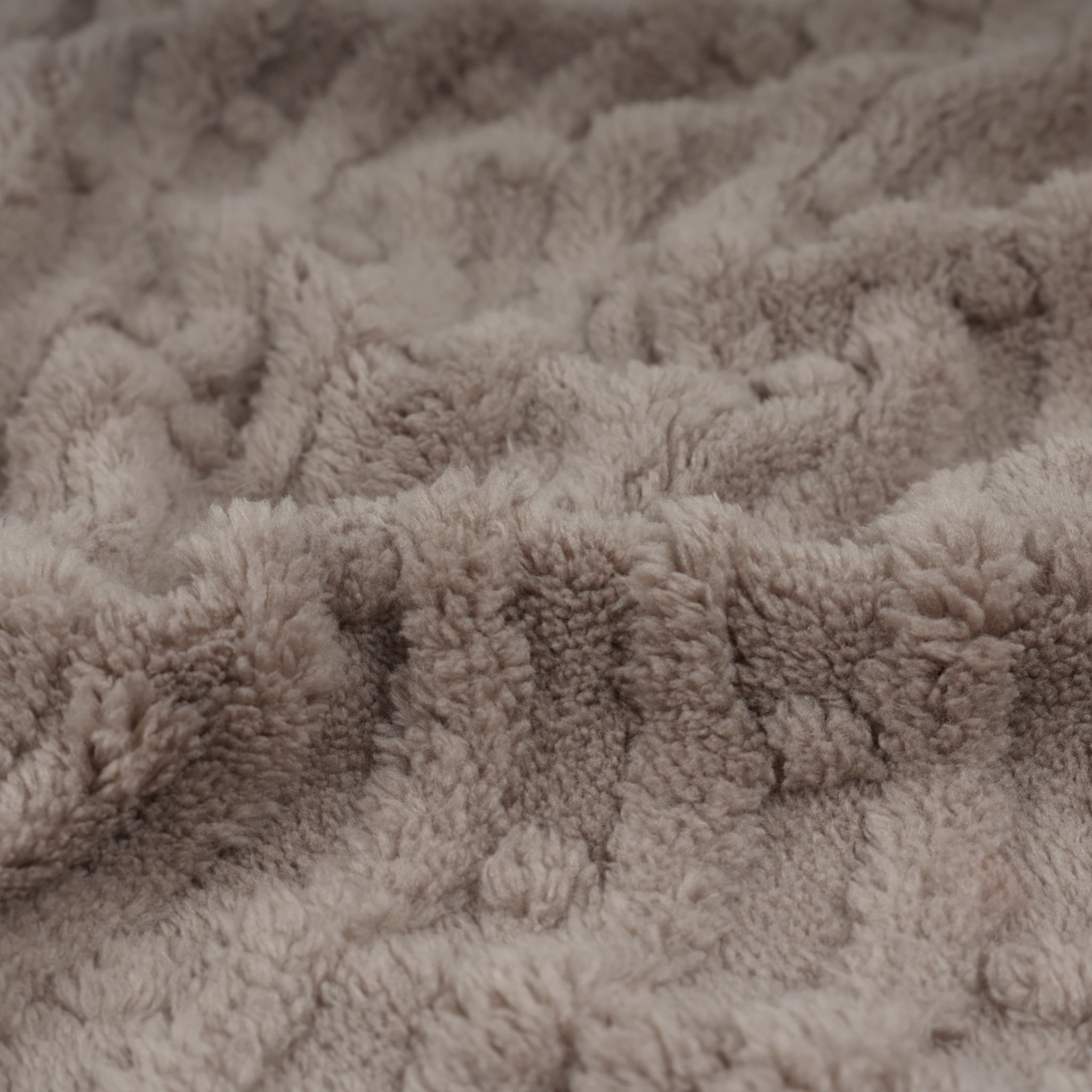
Sherpa fleece differs from ordinary fleece because of its textured pile structure. While traditional fleece fabrics often have smooth, brushed surfaces, Sherpa fleece contains thicker, looped or curly fibres that resemble lamb’s wool.
This pile structure traps air efficiently to improve thermal insulation.
The fabric usually consists of two distinct sides:
- Soft pile surface
- A flat knit backing layer.
The backing layer provides structural stability, while the pile layer delivers warmth and softness.
Modern textile manufacturing techniques enable highly customised textures and densities to be achieved in Sherpa fleece, depending on the requirements of the product application.
How Is Sherpa Fleece Fabric Manufactured?
The manufacturing process behind Sherpa fleece involves a combination of knitting technology, fibre engineering, brushing techniques, and finishing treatments.
Understanding this process helps to explain why Sherpa fleece performs differently from standard fleece materials.
Step 1: fibre selection
Production begins with the selection of appropriate synthetic or blended fibres.
Manufacturers evaluate the following factors:
- 부드러움
- Fiber length
- 내구성
- Dye compatibility
- Thermal performance
- Sustainability goals
Polyester is especially popular because its thermoplastic properties allow excellent texture retention after brushing and heat setting.
Step 2: Knitting the base fabric
Most Sherpa fleece fabrics are produced using circular knitting machines.
This creates a flexible, soft fabric that is ready for pile formation.
3단계: 브러싱 및 올리기
Specialised brushing equipment raises fibres from the surface.
This creates the fluffy texture characteristic of Sherpa fleece.
The brushing process significantly influences:
- 따뜻함
- 부드러움
- Thickness
- Visual appearance
Step 4: Heat setting
Heat setting stabilises the pile structure and improves dimensional consistency.
Step 5: Dyeing and finishing
Modern finishing treatments improve:
- Antipilling performance
- Moisture resistance
- 견뢰도
- Flame resistance
- Antistatic behaviour
The following table summarizes key production stages:
| Manufacturing Stage | Purpose |
| Fiber selection | Determines softness and durability |
| Knitting | Creates a structural foundation |
| Brushing | Produces a pile texture |
| Heat setting | Stabilizes fabric |
| 마무리 | Enhances performance |
Advanced textile factories increasingly use computerized brushing systems to achieve highly controlled pile consistency and luxury-grade softness.
Why Is Sherpa Fleece Fabric So Warm?
One of the main reasons consumers choose Sherpa fleece fabric is because it is exceptionally warm.
The thermal performance of Sherpa fleece depends largely on its pile structure.
Air Trapping Mechanism
The raised fibres create thousands of tiny air pockets within the fabric.
These pockets reduce heat transfer by trapping warm air near the body.
This principle is similar to insulation systems used in:
- Wool garments
- Down jackets
- Thermal blankets
The trapped air acts as a thermal barrier against cold external temperatures.
Lightweight insulation
Unlike dense wool fabrics, Sherpa fleece provides strong insulation without excessive weight.
This improves:
- Wearability
- Layering comfort
- Mobility
- Casual everyday use
Moisture resistance
Synthetic fibres absorb less water than natural wool.
This enables Sherpa fleece to retain warmth even in damp conditions.
Breathability balance
High-quality Sherpa fleece balances warmth with airflow regulation.
This helps to prevent overheating during moderate activity.
Modern textile engineering is continually improving the warmth-to-weight ratio of Sherpa fleece through advanced pile density optimisation.
Sherpa Fleece vs Traditional Fleece: What’s the Difference?
Consumers often confuse Sherpa fleece with standard fleece fabrics, but important differences exist.
| 기능 | 셰르파 플리스 | Standard Fleece |
| Surface texture | Woollike pile | Smooth brushed surface |
| 모양 | Fluffy and textured | Flat and sporty |
| 따뜻함 | Higher insulation | Moderate insulation |
| 무게 | Slightly heavier | Lighter |
| Fashion style | Cozy and premium | Athletic and casual |
| Typical use | Jackets, blankets | Sportswear |
Sherpa fleece generally provides a more luxurious and winter-oriented aesthetic compared with ordinary fleece.
Standard fleece, by contrast, is often optimized for athletic performance and lightweight layering.
Common Applications of Sherpa Fleece Fabric
Sherpa fleece is popular across multiple industries thanks to its versatility.
Apparel industry
Sherpa fleece is widely used for:
- Hoodies
- Jackets
- Sweatshirts
- Lined coats
- Winter vests
- Fashion outerwear
Its visual warmth aligns strongly with autumn and winter fashion trends.
Home textile industry
Sherpa fleece blankets are one of the fastest-growing categories of home comfort products.
Popular products include:
- Throw blankets
- Bedding
- Cushion covers
- Sofa accessories
Baby products
The softness of Sherpa fleece makes it popular for:
- 아기 담요
- Infant clothing
- Stroller liners
Pet products
Pet beds often use Sherpa fleece as animals respond well to soft, insulating textures.
Outdoor products
Sherpa fleece is used for:
- Sleeping bag linings
- Camping accessories
- Thermal travel products
Its lightweight warmth makes it ideal for outdoor use.
셰르파 플리스 원단의 장점
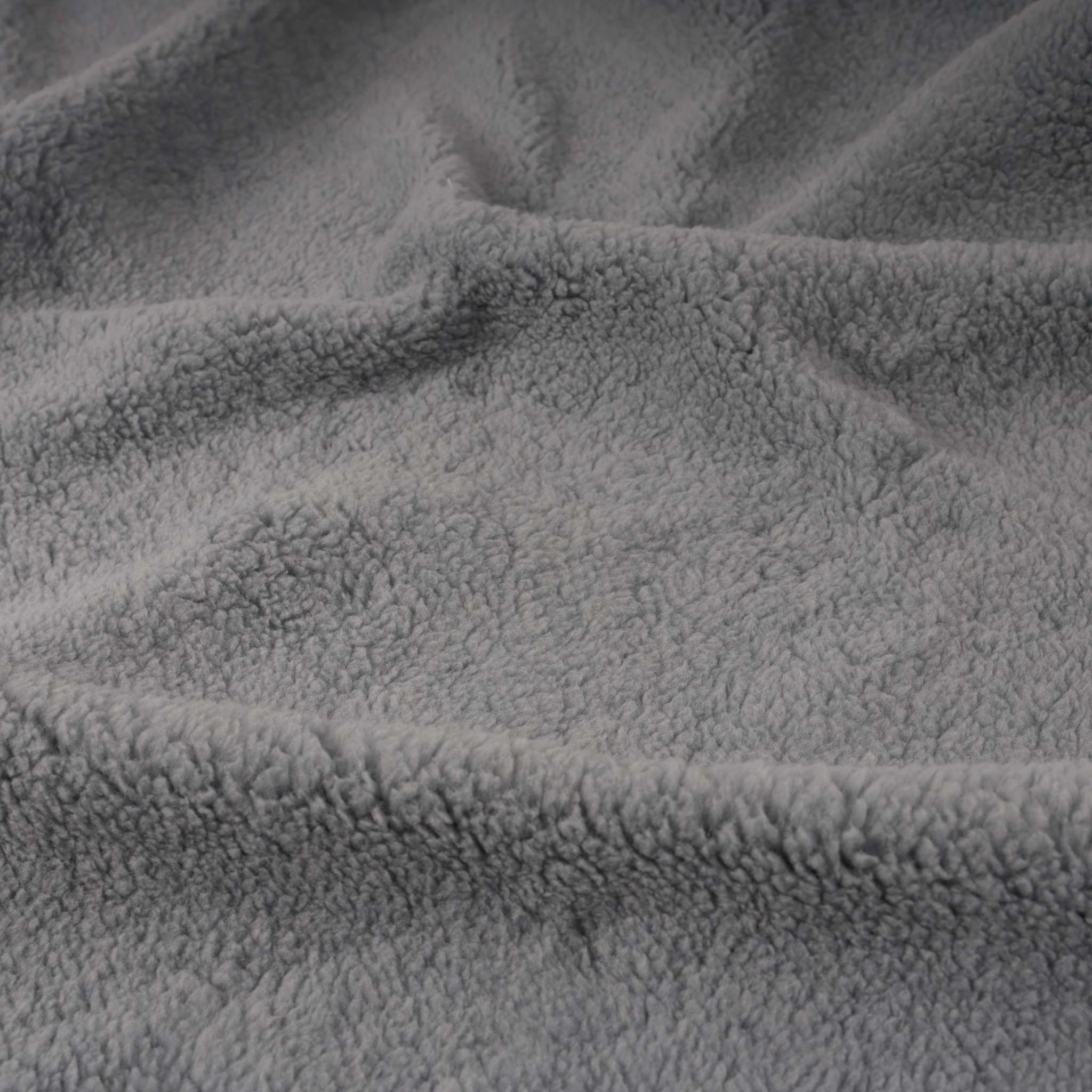
Sherpa fleece has several important commercial and functional advantages.
- Excellent softness
Consumers strongly associate Sherpa fleece with comfort and cosiness.
- Lightweight warmth
It provides high thermal retention without excessive bulk.
- Easy maintenance
Unlike natural wool, Sherpa fleece is usually machine washable.
- Cost efficiency
Synthetic production significantly reduces manufacturing costs.
- Animal-friendly alternative
Sherpa fleece provides a woollike appearance without the need for animal-derived shearling.
- Fast drying
Polyester fibres absorb very little moisture.
The following table summarizes key advantages:
| Advantage | Benefit |
| Soft texture | Comfort |
| Thermal insulation | 따뜻함 |
| 경량 | Easy wear |
| Washable | Convenience |
| Affordable | Massmarket accessibility |
| Durable | Long lifespan |
Sustainability and the Future of Sherpa Fleece
Sustainability has become one of the textile manufacturing industry’s biggest priorities.
Modern Sherpa fleece development increasingly focuses on the following:
- Recycled fibres
- Reduced water usage
- Lower carbon emissions
- Circular textile production
- Many manufacturers now produce Sherpa fleece using recycled plastic bottles.
This reduces the use of virgin polyester.
- Eco-friendly dyeing
Low-impact dyeing technologies reduce environmental pollution.
- Longer product lifespan
Durable Sherpa fleece products help reduce waste from fast fashion.
Future innovations may include:
- Biodegradable synthetic fleece
- Biobased polyester alternatives
- Smart, thermal-regulating fibres
- Antimicrobial Sherpa fabrics
These developments will likely expand the range of applications for Sherpa fleece even further.
Fashion Trends Driving Sherpa Fleece Demand
Sherpa fleece has become strongly associated with a modern aesthetic of comfort.
Several fashion trends have increased global demand.
- The Cozy Fashion Movement
Consumers increasingly prioritise clothing that provides emotional comfort.
- Outdoor lifestyle fashion
Outdoor-inspired fashion continues to influence mainstream apparel.
- Social media influence
Sherpa textures photograph well, supporting Instagram and TikTok fashion trends.
- Luxury casualwear
Many luxury brands now incorporate Sherpainspired textures into their premium collections.
The combination of emotional comfort and visual warmth explains the strong commercial future of Sherpa fleece.
FAQ About Sherpa Fleece Fabric
What is Sherpa fleece made of?
Most Sherpa fleece fabrics are made from polyester, acrylic, cotton blends, or recycled synthetic fibers.
Is Sherpa fleece warmer than regular fleece?
Yes. Sherpa fleece usually provides greater insulation because of its thicker pile structure.
Is Sherpa fleece real wool?
No. Most Sherpa fleece is synthetic and designed to imitate wool or shearling.
Can Sherpa fleece be machine washed?
Most Sherpa fleece products are machine washable using gentle cold-water cycles.
Does Sherpa fleece pill easily?
Low-quality Sherpa fleece may pill over time, but high-quality fabrics use antipilling treatments.
Is Sherpa fleece breathable?
Sherpa fleece offers moderate breathability while prioritizing thermal insulation and comfort.
결론
Sherpa fleece fabric has become one of the most commercially successful and widely recognised comfort textiles in the modern fabric industry. Sherpa fleece combines wool’s warmth with the softness, lightweight structure, affordability, and easy maintenance of synthetic fibres, bridging performance and emotional comfort.
Its versatility in apparel, home textiles, baby products, pet accessories and outdoor products continues to drive global demand, and ongoing innovations in recycled fibres, sustainable manufacturing and advanced textile engineering further strengthen its long-term market relevance.
With fashion trends increasingly emphasising comfort-driven lifestyles, casual luxury and tactile consumer experiences, Sherpa fleece is expected to remain one of the most important and fastest-growing textile categories in the fashion and functional fabric markets worldwide.