


Introduction: Why the Composition of Minky Fleece Fabric Matters
When fabric manufacturers, retailers, and product specifiers discuss “ultra-soft fabric”, the term “minky fleece fabric” is often associated with baby towels, plush toys, beautiful throws, and soft clothing. However, beyond its popular reputation for comfort and aesthetic appeal, understanding the composition of minky fabric and how it is constructed is crucial to supply chain decision-makers, this is because of its influences the fabric’s durability, feel, care for washing, cost, performance, and differentiation. In this article, we explore the materials utilized, the methods of construction, the association between “minky fleece” and other fabric types, the manufacturing processes, the way in which “minky fleece” is related to other fabric types, the importance of quality, and the fashion trends. Whether you’re a fabric consumer, a brand that is launching a soft-touch product, or a manufacturer that is evaluating supplies, this specific guide will assist you in understanding this specialized area of fabric quickly.
Defining “Minky Fleece Fabric”: Terminology and Scope
Before beginning the composition process, it’s beneficial to clarify what the exact definition of minky fabric is, this is because the term is frequently used in different fields.
The term “minky” (or similar words) is typically used to describe a soft, flocked fabric that is intended for use in a baby’s pajamas or other items that are cuddly. One supplier explains: “Minky fabric… is a type of microfiber fabric that is renowned for its luxurious and soft texture. It’s composed of 100% polyester fibers.
The word “fleece” in textile terminology is typically used to describe a knitted or napped synthetic fabric (typically 100 % polyester) that is intended for warmth and comfort (e.g., polar fleece).
As a result, “minky fleece” is frequently used to describe a fabric that possesses the extra-plush feel of a hand and the micro-pile structure of minky, plus the comfort, weight, and warmth of a fabric that is fleece-like. Many different sources use the term in an interchangeable manner with either minky or minky plush fabric.
As a result, when people talk about minky fabric in this context, they are referring to a synthetic textile (primarily polyester) that has a plush surface (pile or micro-pile) and a textile that is designed to be touched or have comfort, the latter of which is achieved through the use of a fleece as its sole component.
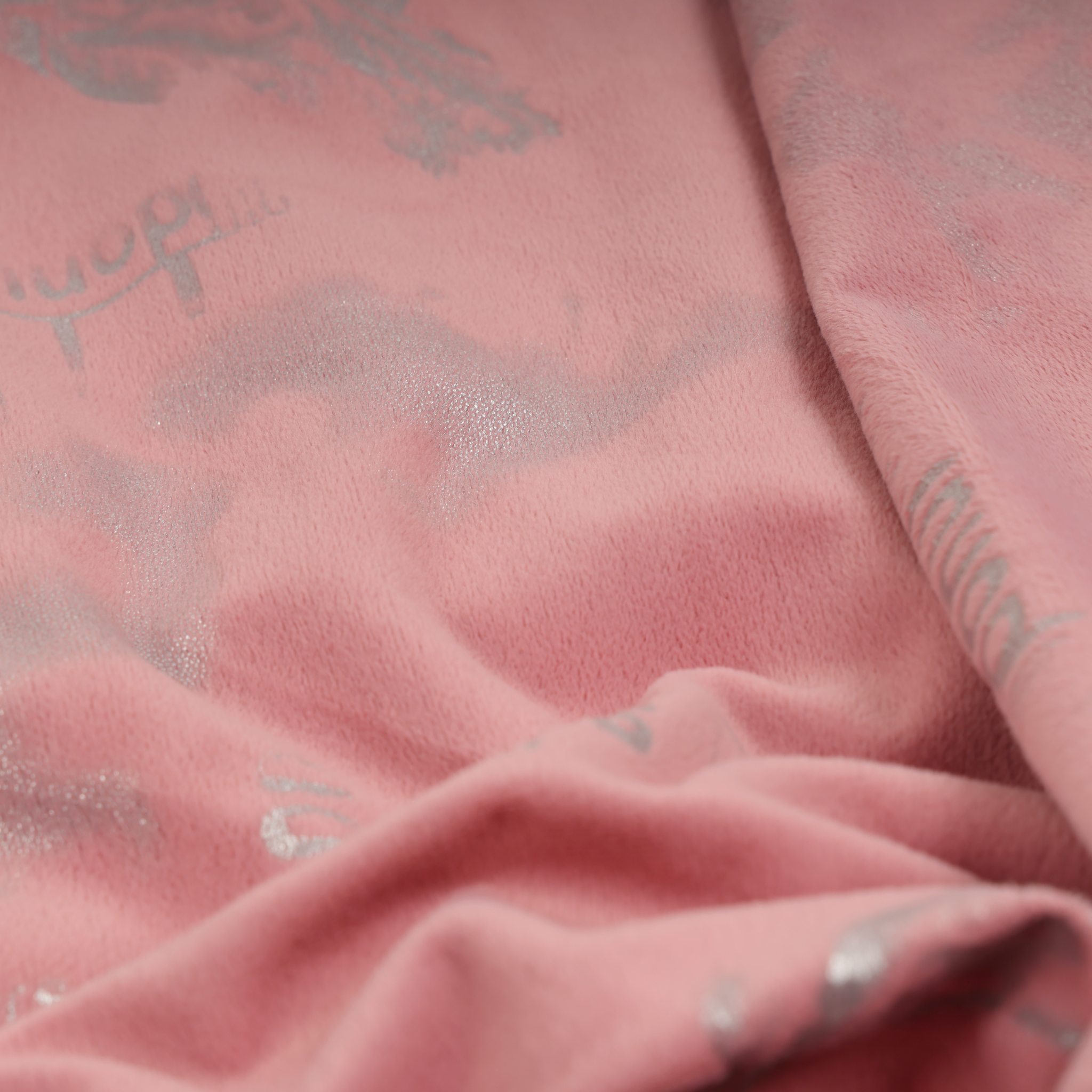
What Materials are Used in Minky Fleece Fabric?
The core of any fabric is the composition of its fibers; the question of what it is made of is answered by this. With synthetic fabric that is flocked, the substances employed are mostly consistent within the sector.
-
Primary Fiber: Polyester
The majority of suppliers believe that minky/minky fabric is composed of 100% polyester fibers (or very close to this).
Why polyester? Because of its long durability, manageability, cost-efficiency, ability to be micro-fibrilled, dyed, printed, and its compatibility with knitted structures and pile finishing.
-
Polyester Micro-Fibers, Pile Fibers, and Yarn for Construction
In many instances, the polyester employed is a microfiber or very small fiber that is then processed (cut, brushed, stacked) to produce that super-soft surface.
The manufacturing process steps: polymerization, which is also called printing, is the process of making a substance from a mixture of components, which can be used to create fabric.
-
Subordinate & Alternative Materials: Spandex, Additions, Supporting
While many common minky or flannel fabric types are composed entirely of polyester, some variants will include other fibers or combinations:
Some variants that stretch minimally (often utilized for apparel or fun items) contain spandex/elastane that offers 4 different stretch directions.
Supporting fabric or flannel-style structures may include flocked support, knitted support, or they may require additional support fabric for stability.
However, the core external layer is still composed of polyester. From a manufacturing perspective, if a supplier describes a fabric as having “iminy fleece”, you would typically expect at least 90-100 % of it to be polyester.
Construction & Manufacturing Process of Minky Fleece Fabric
Understanding the process of making minky fabric (from polymer to finished product) provides information on the behavior of the material, cost, and quality.
-
Fabric Cropping or Weft/warp Method
Many sources concur that minky fabric is not woven, but instead is composed of a series of small stripes. For instance, Shannon states: “All minky fabric is a type of fabric that gives it a super-soft feel while still maintaining its durability.”
Some utilize warped bases, while others utilize flat or circular bases for the final piece of fabric.
As a result, fabric manufacturers have a preference for a knit foundation that promotes stretch, drape, and supports the final pile composition.
-
Pile Development, Brushing, and Shearing
The plush fabric of minky fleece is attained by raising the stack or brushing the knitted fabric. This involves:
Creating a dense base,
Employing mechanical stroking or sanding to brush the ends of fibers up,
Trimming or shearing to a consistent height of pile (typically a few mm),
Heat application to maintain the pile’s consistency.
-
Dyeing, Pricing, and Finalizing
Because polyester microfiber fibers have a color capacity and can be digitally printed, minky fabric often has a variety of colors and options to print.
Also included in the process: anti-pill treatments, control of shrinkage, brushing, shearing, and low-lint certification.
-
Quality Control and Performance Reviews
From a manufacturing perspective, one should watch out for:
The weight (gsm or oz/yd²) and pile’s density,
The consistency of the layer and its uniformity,
Supporting steadfastness and compactness,
Performance regarding washing and drying (shrinkage, feel of the hand, shedding),
Fastness to color, especially in the crocking of colorful prints. Shannon is concerned with the potential for “crocking” if low-quality dyes were employed.
Compatibility with the intended use: baby products require surfaces that are hypoallergenic, flame-retardant, and low in shed.
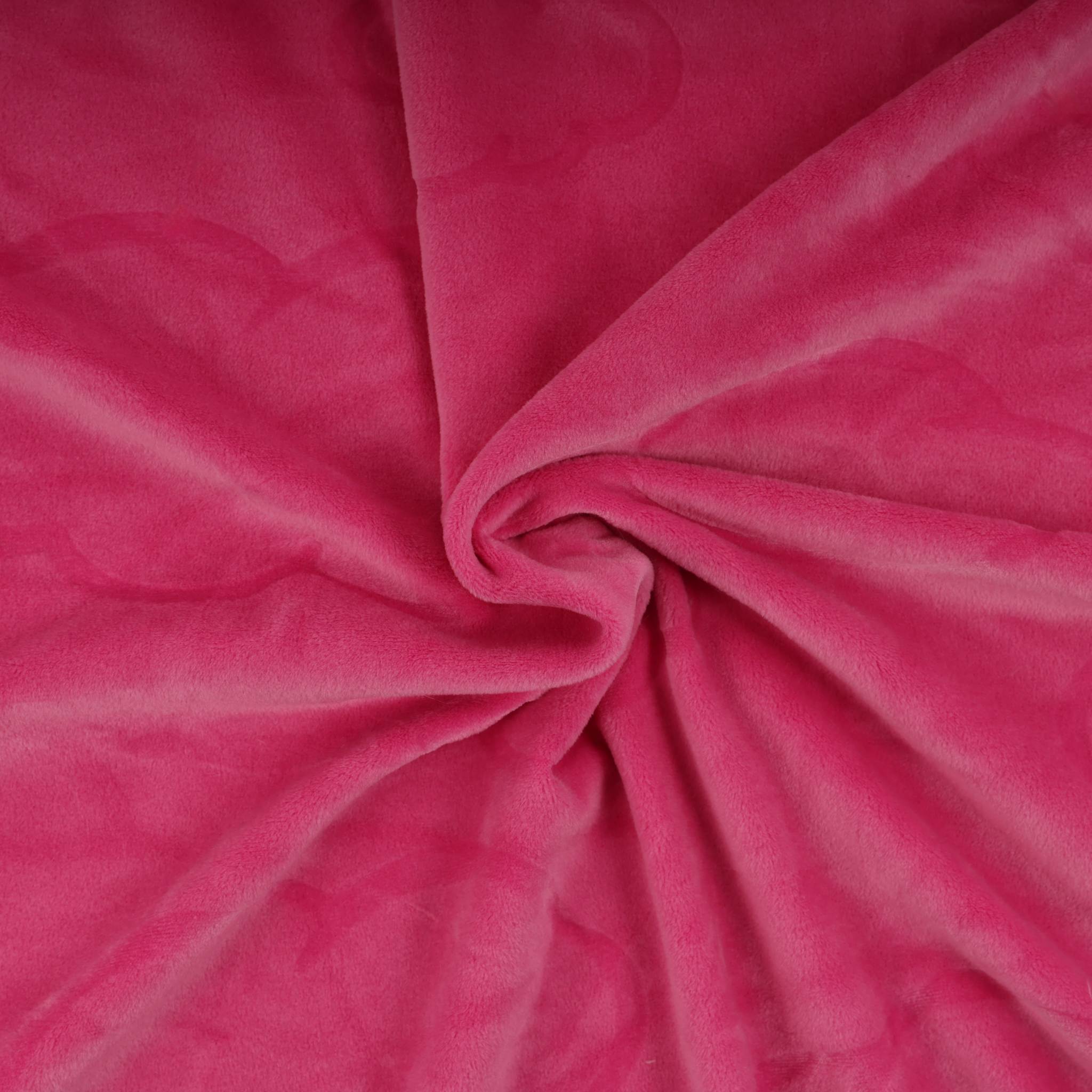
How Is Minky Fleece Fabric Different from Standard Fleece?
To understand the benefits of the minky fabric fully, it’s important to understand the difference between it and standard fabric, the latter of which is often used but differs in design, finishing, and application.
-
Submitted Content: Often Similar
Both minky and fleece fabrics are typically composed of 100% polyester.
-
Building and Differences in Texture
Fleece: It’s typically composed of polyester that is knife-cut or circularly knitted, and it’s also composed of a dual-layered texture (both sides have pile or nap), which is intended to provide warmth and insulation.
Minky (or minky fabric): It’s typically composed of a plush fabric on one side; this side is usually textured or flocked, and the underside is typically smooth. The plush side is what makes it stand out. Shannon notes: “Most minky fabric is single-sided, which means that the plusher, fur-like composition is only located on the top side.”
-
Hand-Feel, Execution, and Market Opportunities
Minky: A focus on the extra-soft sensation, comfort, and plushness. Often utilized for baby bedding, throws, stuffed animals, and high-end interior design.
Fleece: A focus on warmth, sustainability, outdoor clothing, general bedding, and ackets.
-
Difference in Performance
Minky’s typically have a higher average of pile height, a more fluffy appearance, and a higher surface softness.
Fleece may have a superior insulation quality, lower pile heights, and a simpler sewing process.
Minky may need more precise handling or sewing because of its stretch, plush pile, potential for staining or scratching, and the fleece may be more straightforward.
Key Composition & Quality Indicators for Industry Buyers
For the procurement of textile, developers or manufacturers who want to sell minky fabric should be aware of the following information.
-
Fibre’s content and certification
Ensure that all of the fabric is composed of 100% polyester (or that it is clearly defined as a blend).
Request the inclusion of OEKO-TEX®, REACH compliance, and Hypoallergenic certification, in particular for baby products.
The fastness of dyes and the potential chemical treatments associated with them (e.g., anti-pill, flame-retardant) should be documented.
-
Weighing (GSM) and the height of the pile.
Heavier weight is typically associated with more yarn, a denser pile, and a more inviting feel.
Pile height: short pile (1-3 mm) can be used for stuffed animals; longer pile (10-40 mm) can be used for beautiful throws. Lazy Lamb discusses variations.
-
Knit Construction and Support Stability
Knit type: circular or stretchy knit; the stability of the backing is enhanced by snagging or holding.
One-sided pile: Many fabric types are one-sided.
-
Surface Finish & Shedding
The process of quality assembly (raising, trimming, or heat setting) ensures that the pile is maintained in a vertical position it doesn’t have any flaws.
Assess by using a mild pull before purchasing in bulk, and release the fiber in the test.
-
Cleanliness, restoration, and shrinking
Good quality minky fleece has a soft consistency after washing, minimal amounts of pile, and minimal shrinking.
Examine the color of the fabric, assess the thickness of the fabric, and feel the fabric’s texture.
-
Printing, Colour and Variations in Texture
fabric options: colors that are solid, printed patterns that are digital,
If custom patterns or revisions are needed, verify the printability, colorfastness, and behavior post-printing.
Typical End-Uses and Market Applications of Minky Fleece Fabric
Understanding the purposes of minky fabric helps to connect the specifics of the material with the desired result.
-
Baby Bedding, Throw, and Decorative Home Items
The most common purpose: soft baby bedding, Cuddly throws, and accessories for nurseries.
Because of its plush feel and comfort, it’s also popular in the home as well as in pillows, loungewear, pet beds, and other comfort goods.
-
Plush toys and stuffed animals
Because of its softness and comfort, minky fabric is employed for the stuffing of animals and the creation of plush toys.
Plush toy manufacturers appreciate its dense mass and low shedding (when produced properly).
-
Fashion apparel, Loungewear, and Sleepwear
Less frequented than blankets, minky (and minky-fleece combinations) are incorporated into high-end loungewear, children’s bedding, robes, and accessories. The variants that stretch (mochi minky) have spandex that serves as an apparel component.
-
Niche Markets and Personalized Products
Because of its softness and printability, minky fabric is employed in the production of custom clothing, limited edition goods, high-end pet accessories, and baby products. Some companies attribute their hypoallergenic properties and plushness as the primary differentiator.
Market Trends, Supply-Chain Considerations & Sustainability
For companies that specialize in B2B, buyers, and sourcing, it’s important to recognize the common trends and issues in the supply chain that concern minky fabric for clothing.
-
Increasing demand for luxury fabric
With consumers increasingly concerned with comfort, luxurious textiles, and “mega-soft” goods, the demand for thin fabric has increased. Nowadays, manufacturers of blankets promote their products as the softest of them all, based on superior minky.
This implies that fabric providers must provide a higher GSM, more pile, and a better finish—all of which increase the cost and complexity of manufacturing.
-
Demand for Printed Cards and Customization
Because minky fabric fibers facilitate high-resolution printed patterns, many brands utilize custom patterns to distinguish themselves. Fabric mills must guarantee the quality of the printed fabric and manage the dye’s depth of coverage, pile’s flatness, and stability.
-
Sustainability Concerns
While polyester is budget-friendly, environmental concerns (microplastics, recyclability, and circular economy) are increasing. Suppliers may have to transition towards reusable polyester, bio-based fibers, or less detrimental finishes. Similar to the fleece industry, the microfiber textile industry is concerned with the release of fibers.
Manufacturers should demand certifications, reproducible data about the supply chain, and environmental credentials when purchasing minky fleece.
-
Quality Assurance, Starting Times, and Waste from fabric
Because plush fabric is heavier and more voluminous, the planning of yield, control of waste, and logistics is different. Fabric mills may provide samples that can be used to assess the ability to shed, drape, print, and the duration of the pile.
From a supply chain perspective, inventory quantity, roll stock weight, shipping expenses, and storage (due to their bulkier nature) need to be planned for.
Care Guidelines, Durability & End-User Experience
For fabric developers and marketing professionals, the concern with regard to the end-user care and the durable nature of items made from minky fabric is as important as the initial feel.
-
Care Instructions
Many fabric types that are minky are 100 percent polyester, which allows for easy care: machine wash on a gentle cycle, cool water, avoid harsh chemicals, tumble dry at a low setting, or hang-dry.
Crucial points: avoid fabric softeners that might lead to the pile’s flattening, avoid high temperatures that can melt or destroy the microfibres, and avoid abrasives that cause the pile to stand up.
-
Maintenance Considerations
Main aspects of durability that are important to the minky fabric are:
Pile collapse or flattening: Over time, heavy usage may lead to a plush surface that is flattened over time. This is best suited for heavier weight densities that will provide long-term performance.
Release of shedding materials: Lower-quality soil may be released.
Fastness to color & crocking: The printed mink must be evaluated; some fabric types may bleed or wear away in the wash.
Cleanliness: Despite polyester’s stability, the fabric pile might have a slight decrease in length before cleaning. This was tested pre-clean.
-
Marketing and User Experience Implications
From a brand perspective, the softness of the minky fabric is a significant attribute (comfort, luxury, baby-friendliness). However, user refunds or returns are often caused by pilling, flattening, loss of softness, or color migration—in this case, the material specifications and user instructions must be consistent. Textile consumers must focus on the long-term feel rather than the initial softness only.
Conclusion: The Material Essence of Minky Fleece Fabric
Ultimately, minky fabric is primarily composed of polyester microfibres; it is also decorated with a decorative surface that functions as a shield, and it is characterized by high pliability and comfort. Its creation involves the knitting of fabric, the raising and cleaning of hair, and the final step is to wash and dry the fabric. The primary differentiators for industry participants are the quality of the fiber, the pile’s height and density, the type of finish, the stability of the backing, and the performance over time (wash, feel, color).
From product design through manufacturing and sourcing, specifying the right minky fleece material means focusing on true composition (not just marketing claims), suitable construction for the intended application (blankets vs apparel vs toys), and aligning finish and durability with brand promises. For customers who want a soft, comfortable fabric that also has a pleasant scent, minky fabric is still a popular choice. However, it’s crucial to have the correct source and design.
By understanding the fabric’s composition, creation, and differentiating quality variations, manufacturers and brands can be assured of the material’s quality, design, and performance. These qualities are all indicative of a “plush luxury” standard that is implied by the term.